

How Lakenheath Fen Was Created: From Farmland to Reedbed
RSPB Lakenheath Fen was created as an inland refuge for Bitterns on drained farmland. Thirty years later, its reedbeds, wet grassland, and Crane habitat show what careful wetland creation can achieve. The work is ongoing and never finishes.
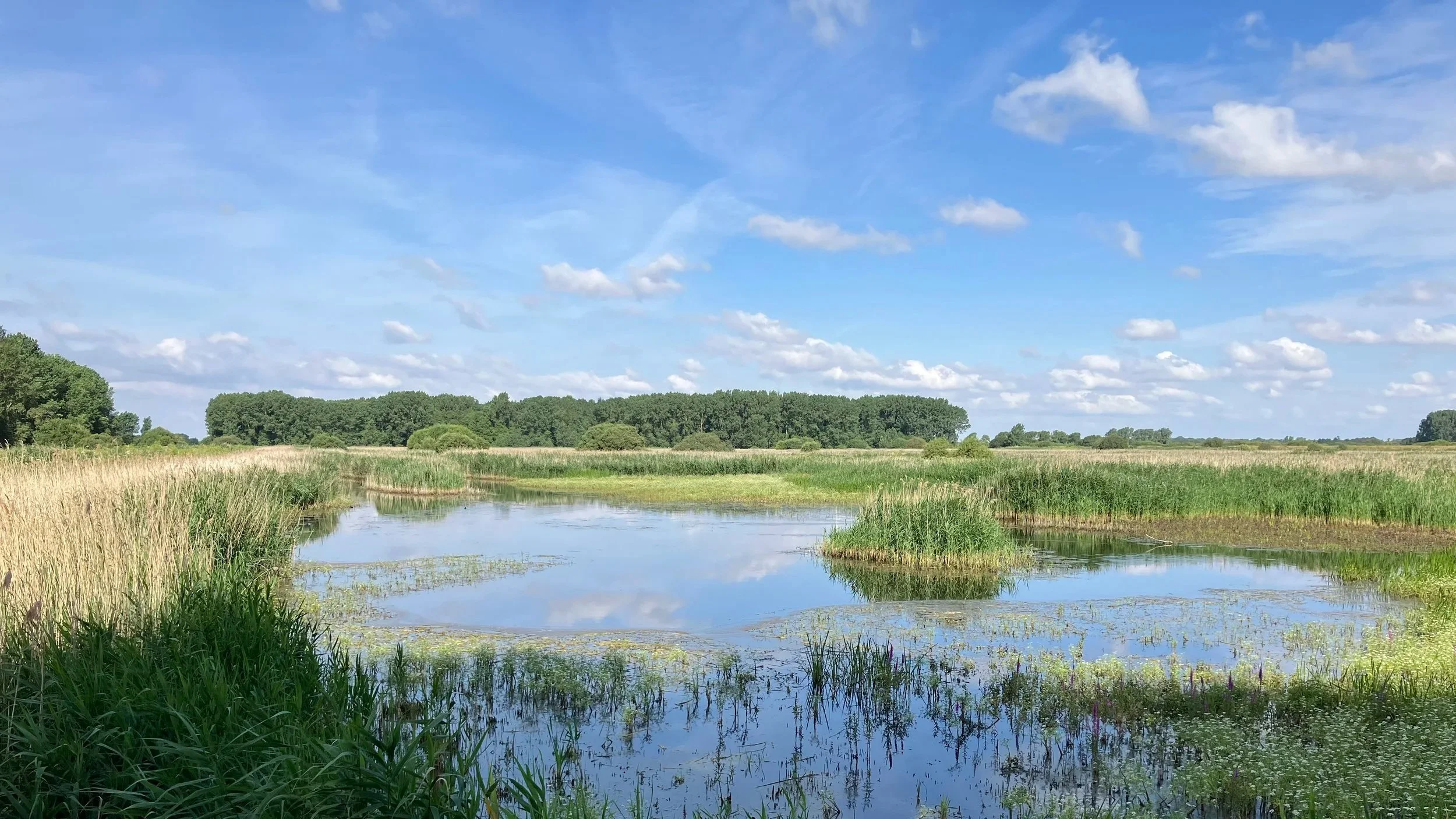
Reedbeds, open water and wet grassland at RSPB Lakenheath Fen .
When I knew this part of the Fens in the late 1980s, it was intensive farmland. On a summer visit now, a Bittern might fly low over a reedbed where carrots once grew. The contrast is real, but saying the old fen has simply returned is misleading.
The RSPB started managing land at Lakenheath in 1995, aiming to create a large inland wetland. They began with about 200 hectares of new reedbed habitat. Today, the reserve covers around 500 hectares of reedbed, wet grassland, and other wet habitats. It stands as one of Britain’s best examples of conservation that builds new habitat instead of just protecting what remains.
Why the project began with Bitterns
Bitterns were close to disappearing from Britain. The national count fell to 11 booming males in 1997, and research showed that several remaining reedbeds were becoming drier and less suitable. A large share of the population also depended on low-lying coastal sites vulnerable to saltwater flooding.
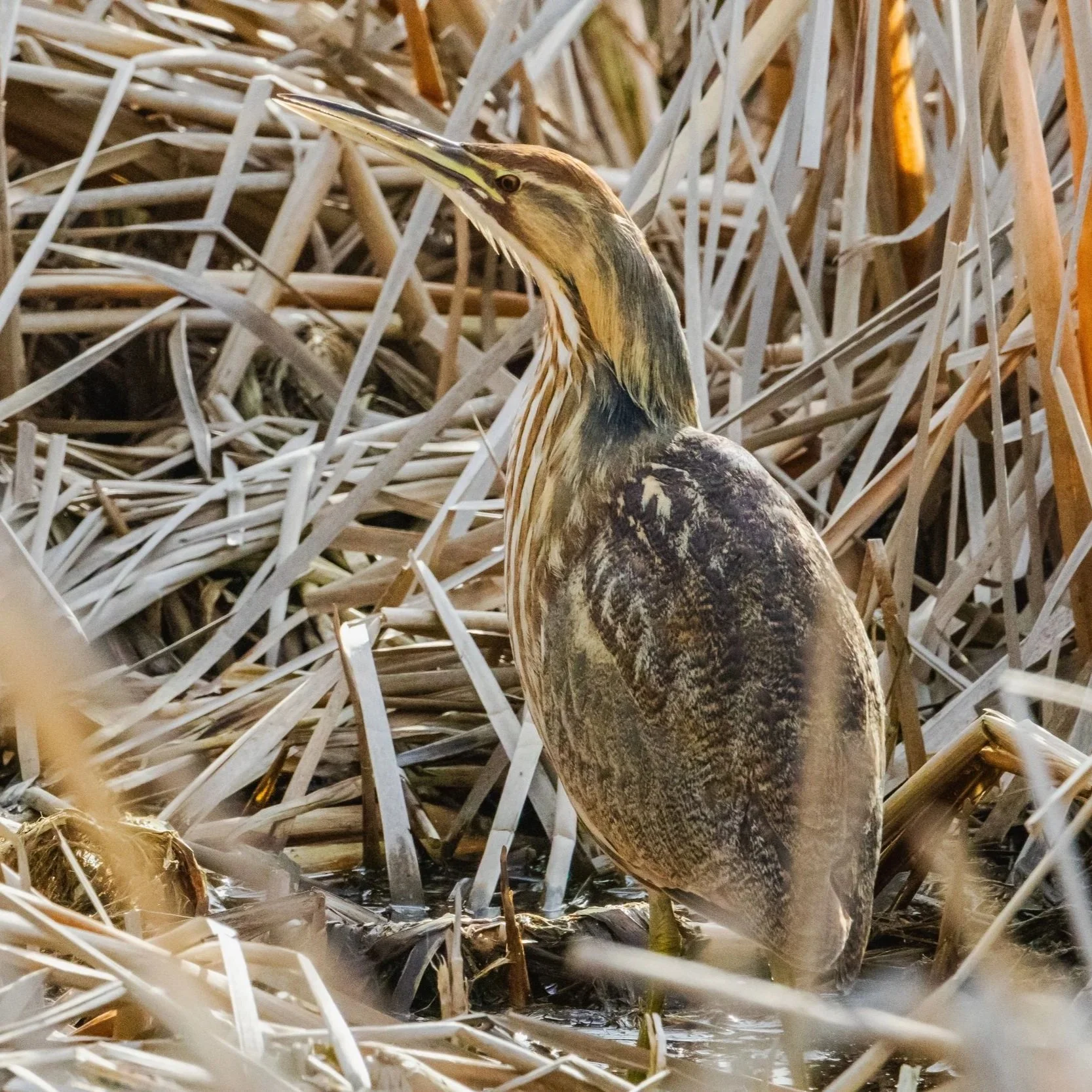
Bittern (Botaurus stellaris)
Instead of waiting for birds to use whatever habitat was left, conservation groups improved existing reedbeds and created new ones. They focused on large inland sites where they could control freshwater conditions. Lakenheath was part of this national effort. Its goal was clear: to provide large areas of reed, shallow wet margins, and fish-rich channels in a place less at risk from coastal flooding.
This history is important because the national recovery is not just due to Lakenheath. Britain recorded 234 booming males in 2023, up from 11 in 1997, and the RSPB counted 138 on its reserves in 2024. The improvement came from research, monitoring, reedbed restoration, and new habitats at many sites. Lakenheath is a key example in this network, but not the only reason for the recovery.
A designed wetland, not an untouched fen
Drainage and intensive farming changed the peat, land levels, and water flow. Just stopping the pumps would not have brought back the complex wetland that existed before large-scale drainage. So, the project created a new managed landscape based on what reedbed birds need.
Fields were split into sections to control water. Old farm ditches were reshaped with shallow edges, new channels and pools were dug, and sluices let water move between areas. Reed grew around open water, flooded edges, and thicker cover. These edges are important for Bitterns, which feed along wet reed margins where fish and other prey are easy to catch.
There is no one right water depth across the reserve. Young reed, feeding edges, open pools, wet grassland, and nesting cover all need different conditions at different times. Managers adjust water levels, cut plants, and keep open water so that one habitat does not take over the whole site. The straight banks, sluices, and separate reedbed sections show ongoing management, not unfinished restoration.
Cranes changed the management
Common Cranes were not the original target, but two pairs bred at Lakenheath in 2007. The first chick fledged in 2009, the first successful breeding in the Fens for around four centuries. Cranes have bred at the reserve in most years since.
As reedbeds get older, they become dense and hard for large birds to enter. Each winter, the reserve team cuts four openings, each about five by ten metres, in the reeds. These 'runways' give Cranes space to land and take off near their nests while keeping cover around them. In 2024, three pairs nested and three chicks left their nests successfully. The RSPB reported 24 young Cranes raised at Lakenheath over the first 18 breeding years.
This shows what habitat creation really involves. The birds came on their own, but their continued presence depends on many small, repeated management choices. A successful wetland does not always manage itself.
The latest phase is about peat as well as reed
The reserve has recently expanded beyond the original reedbed project. By 2026, the RSPB had rewetted about 120 hectares of peat-rich former farmland at Cowles Drove. Within this area, 67 hectares of farmland are being turned into fen and wet and dry grassland, and water levels have been raised across a larger area.
Again, the method focuses on water management. Field drains have been removed or blocked, ditches dammed, and sluices and culverts installed to keep rainfall on the land. A pump with a winter abstraction licence can add water when possible. The goal is not just another block of reed, but a wetter mix of habitats for Lapwings, Redshanks, Oystercatchers, egrets, Cranes, and other wetland birds.
Lapwings, Marsh Harriers, egrets, and other waterbirds have already started using the new area. This is an early sign, but not yet proof of a stable breeding community. The real tests will be whether the target birds breed successfully, if the right plants grow, and if water levels can be kept up during dry seasons.
What rewetting can and cannot claim for carbon
Drained lowland peat releases carbon dioxide as the exposed organic soil oxidises. Raising the water table slows that loss and protects peat that would otherwise continue to shrink. This is now a second purpose of Lakenheath’s water management alongside wildlife.
It is safer, and more accurate, to say that rewetting reduces ongoing peat loss rather than calling the reserve a carbon sink. Wet fens can also release methane, and the overall greenhouse gas balance depends on water level, plants, and soil condition. Monitoring water and peat depth is an important part of judging the project, not just an administrative task.
Reading Lakenheath in the field
It is easiest to see the reserve as a group of managed habitats, not just one big reedbed. Open meres and cut channels create wet edges. Younger and older reed stands offer different structures. Wet grassland adds more places for birds to breed and feed. The Crane openings show how a small change can help a very large bird.
This article explains the conservation project rather than a route around it. The Radius & Flyway Suffolk directory gives the site’s place within west Suffolk birding, while the official RSPB page carries current access, facilities and reserve notices.
Lakenheath’s main achievement is not that every part looks like the old fen. Instead, former farmland now supports breeding Bitterns, Marsh Harriers, and Cranes. The next phase will test if wetter peat can support a wider range of fen and grassland species. The real success is in the habitat created, and the ongoing management shows where the limits are.